Dental Delight Hialeah – Dr Miguel Reyes DDS and Christina Reyes DDS
- (305) 826-5224
- Mon-Fri 8:00-5:00, Sat-Sun Closed
- Mon-Fri 8:00-5:00, Fri 8:00-1:00, Sat-Sun Closed

Oral Surgery & Tooth Extractions in Hialeah, FL
At Dental Delight, we provide personalized oral surgery and tooth extraction services with a focus on patient comfort, careful treatment planning, and long-term oral health.
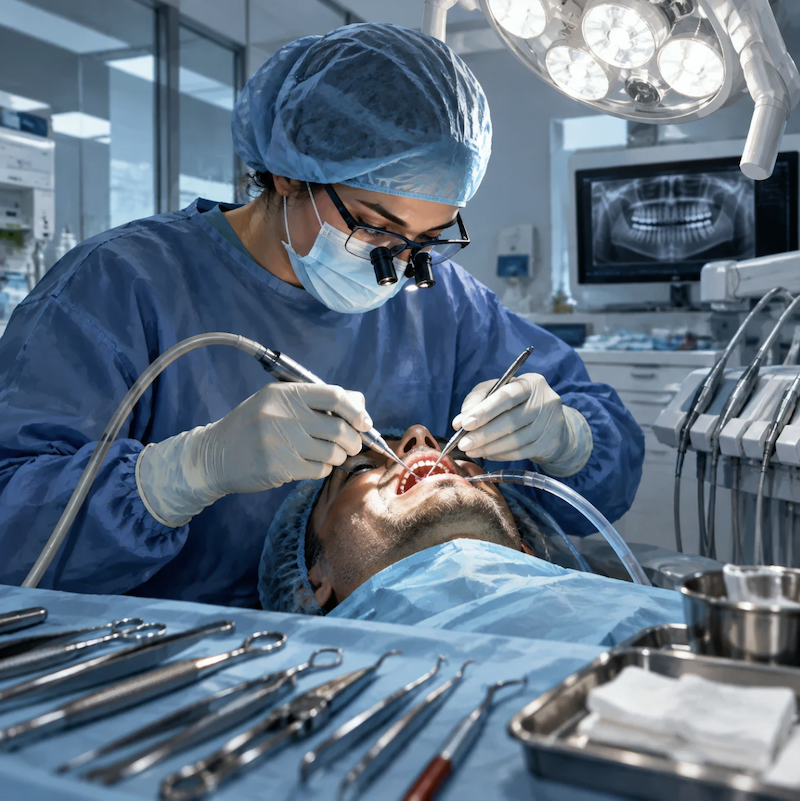
Personalized Oral Surgery at Dental Delight
While our main goal is always to keep your smile healthy and vibrant, specialized oral surgery may sometimes be necessary to address severely damaged teeth, clear deep infections, or resolve complex dental concerns. Our clinical experts are dedicated to guiding you through every step of this process with precision and care.
Tooth Extractions in Hialeah, FL | Our Oral Surgery Services
Tooth Extractions
Removal of teeth that cannot be predictably restored because of extensive decay, fractures, infection, or advanced periodontal disease.
Surgical Extractions
Treatment for teeth that may require additional surgical access or sectioning for safe removal.
Alveoloplasty
Reshaping of the jawbone when clinically indicated to support healing or prepare for a future dental prosthesis.
Implant-Related Procedures
Individualized surgical planning and implant-related treatment to support replacement of missing teeth.
When is a Tooth Extraction Necessary?
At Dental Delight, our primary objective is always to preserve and protect your natural teeth. However, certain conditions make tooth removal the most health-conscious, safe, and effective option to restore your comfort and prevent widespread systemic complications.
Severe Tooth Decay
When a cavity reaches so deep into the tooth’s structure that root canal therapy or advanced restorative bonding can no longer salvage its base.
Teeth Fractured Beyond Repair
Severe dental fractures originating deep beneath the gum line or split roots that make standard crown restorations and preservation impossible.
Advanced Periodontal Disease
Deep progressive gum infections that erode the underlying supportive alveolar bone structure, making the affected tooth unstable and painful.
Severe Dental Infections
Deep abscesses and bacterial spread that pose a significant health risk to adjacent teeth, soft tissue, and overall cardiovascular health if left in place.
Orthodontic & Restorative
Strategically removing teeth to relieve crowding, prepare for orthodontic realignment, or accommodate comprehensive restorative implant setups.
Compassionate Care First
No matter your specific condition, our skilled dental team prioritizes comfort, offering sedation options and precise local anesthesia for a painless experience.
Your Comfort is Our Absolute Priority
Please be assured that a tooth extraction is strictly recommended only after a meticulous diagnostic evaluation, leveraging advanced imagery and testing. We explore and lay out all viable restorative pathways first. If extraction remains the best path forward, we ensure a smooth, worry-free process and provide full guidance on high-quality dental implants and bridges.
Bone Grafting & Socket Preservation After Tooth Extraction
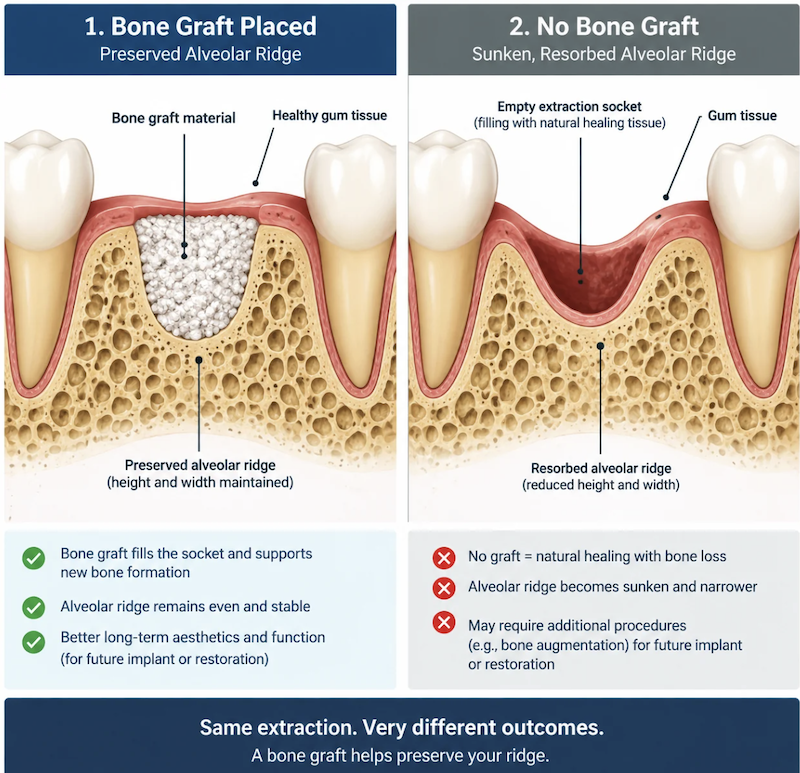
When a tooth is removed, the surrounding jawbone naturally begins to change and gradually lose volume. At Dental Delight, we evaluate whether bone grafting at the time of extraction may help preserve the bone and maintain future tooth replacement options.
Helps Preserve Jawbone
Supports Future Dental Implant Planning
Helps Maintain Ridge Contours
Why We May Recommend Bone Grafting
Socket preservation creates a strong, stable foundation of bone. Without this step, the bone often recedes rapidly, which can make future implants more complex or require more invasive bone building later.
Is bone grafting necessary after every extraction?
Precision & Patient-First Care
We prioritize safety, absolute precision, and clinical excellence at every step of your surgical journey.
Comprehensive Examination
Evaluate the patient’s oral health, medical history, and treatment needs to establish a safe and personalized pathway.
Advanced Treatment Planning
Patient-Centered Care
What to Expect During Your Procedure
We believe in a predictable, supportive experience. Here is a clear, reassuring overview of how our clinical team guides you through every milestone of your treatment.
Consultation & Diagnosis
We begin with a detailed clinical assessment using modern diagnostic imaging. We discuss your visual scans and explore safe, realistic treatment routes together.
Personalized Planning
Our team maps your clinical path based on your anatomy. We review expected timelines, care techniques, and options thoroughly so you feel completely informed.
Procedure & Anesthesia
Follow-Up & Recovery
Recovery and Aftercare Following Oral Surgery
Your healing journey is unique. While general post-operative guidelines build the foundation of a safe recovery, exact timelines and steps always depend on the specific surgical procedure and your body’s individual response.
Postoperative Instructions
Strictly follow the personalized prescription, activity limitations, and customized care guidelines provided by your surgeon.
Swelling & Discomfort
Manage swelling and aches effectively using prescribed pain relief and periodic ice pack applications for the first 48 hours.
Protecting the Surgical Site
Avoid disturbing the healing area. Refrain from tough foods, vigorous spitting, or using straws to safeguard vital blood clots.
Appropriate Oral Hygiene
Keep your mouth sanitized using highly gentle salt-water rinses while brushing remaining teeth carefully with a soft brush.
Follow-Up Appointments
Attend scheduled checkups so our clinical team can evaluate tissue healing, remove stitches if needed, and confirm recovery.
Personalized Recovery
Why Patients Trust Our Team
Personalized Planning
Every smile is unique. We craft custom dental blueprints designed perfectly for your specific clinical goals and active lifestyle.
Advanced Technology
From ultra-low radiation digital X-rays to detailed 3D intraoral imaging, our state-of-the-art tools guarantee early, highly accurate diagnostics.
Compassionate Care
Dental anxiety is real. Our highly empathetic team focuses deeply on your comfort, providing a calm, gentle, and welcoming environment.
Bilingual Team
Tooth Extraction FAQ
Clear, reliable answers about what to expect before, during, and after your tooth removal procedure.
1. When does a tooth need to be extracted?
2. What is the difference between a simple and surgical extraction?
3. Will I be awake during my tooth extraction?
4. How long does recovery take after a tooth extraction?
5. What should I avoid after having a tooth removed?
6. Can a missing tooth be replaced with a dental implant?
Yes. Dental implants are a potential option for replacing missing teeth. Eligibility depends on factors such as your overall oral health, available bone, medical history, and treatment goals. In some cases, bone grafting or socket preservation may be recommended following an extraction. Our dental team can evaluate your individual circumstances and discuss whether an implant is appropriate and when placement may be possible.